
My Dad Dying Is Chic
By Daniella Canseco
My dad dying is chic. It’s mysterious almost.
‘Daniella? Yeah, her dad died’. People wonder: ‘Is she okay? Is she depressed? Is she crazy now?’ It’s an added layer of cool. Like ‘Damn, she’s been through some shit.’ It almost feels like a disturbing secret society you feel a part of because not many people have experienced that type of death, even by the time of early adulthood.
I feel like Kim Kardashian when I say, ‘when dad died.’ It feels rich coming out of my mouth because it carries so much depth. The fact I’m still here saying that shows a type of resilience only few understand. I remember the first time I had to say it out loud. I went back to school after only four days of being gone. I got called into the head office and asked about my attendance and to sign a form acknowledging long extended absences couldn’t happen again. The lady was nice, I was trying hard not to cry. I remember focusing on the harsh white LED lights cascading off her long, black acrylic nails as she typed up a letter to my parents, or parent. I focused on the sound of the keyboard, it reminding me of the hours I spent in my dad’s office hearing him type up big numbers and impressive work things I didn’t understand and still don’t. Another girl walked in, another delinquent about to be lectured I assumed. The lady handed me the pen and slid the paper across the wooden table, ‘just sign at the bottom’. I stood up and grabbed the pen, shaking as I tried to sign. My eyes welled up with tears as I saw: ‘To the parents of-‘.
Damn that letter ‘s’.
A tear loudly smacked onto the paper and made the ink ooze.
‘My dad died, I’m sorry.’
I immediately broke down. I felt the lady grab my arm as I began to faint, ‘Oh honey, I’m so sorry’. I heard the other girl in the room, ‘I’m so sorry.’ I glanced at her as my knees weakened, she seemed genuine. I still think about her, I wonder if she thinks about me. After this incident, for a while, I didn’t dare say the words. I also physically couldn’t. It wouldn’t come out of my mouth. I would try to speak and.... Nothing.
‘My dad...’
‘You’re dad what?’
‘He...’
‘He what?... He... flew to the moon? He’s a movie star? Is Obama? Is 9+10, 21?’ The second time I said it was because I was reluctantly put into group therapy at the Children’s Bereavement Center so I kind of had to... These bitches, I thought.
The other kids could say their ‘special person’ had died without melting into a puddle of tears, why couldn’t I? Specifically, that day our grief therapy work was painting. I remember thinking, ‘this isn’t fucking helping.’ That was the first and last time I did that. Time went on, things got easier, then harder, then easier. The grief didn’t go away; I just got used to it. When I was 16, I finally had the courage to watch the videos of us together I had on a hard drive. I clicked play on the first video, my first day of kindergarten. I heard his voice, and realised how long I had gone without it. So long, that the memory began to slip, that his voice was that of a stranger, not my dad. I would watch these videos every night. For a while, I would wake up, breathe out, not knowing if I’d breathe back in.
When someone says their parent is dead, people just assume they have a certain type of strength and mental stamina without them even needing to prove it. This is why it’s chic, because chicness is all about effortlessness, and when you say your parent is dead, you seem effortlessly strong and wise without needing to say anything else. People don’t see the internal struggle, they just see that you’re still here. Perhaps it’s offensive to jack up grief as some sort of coolness or exclusivity, but I don’t care. My loneliness within my sea of grief is something exclusive, and not an exclusivity I’m consenting to, so why not make it seem chic.
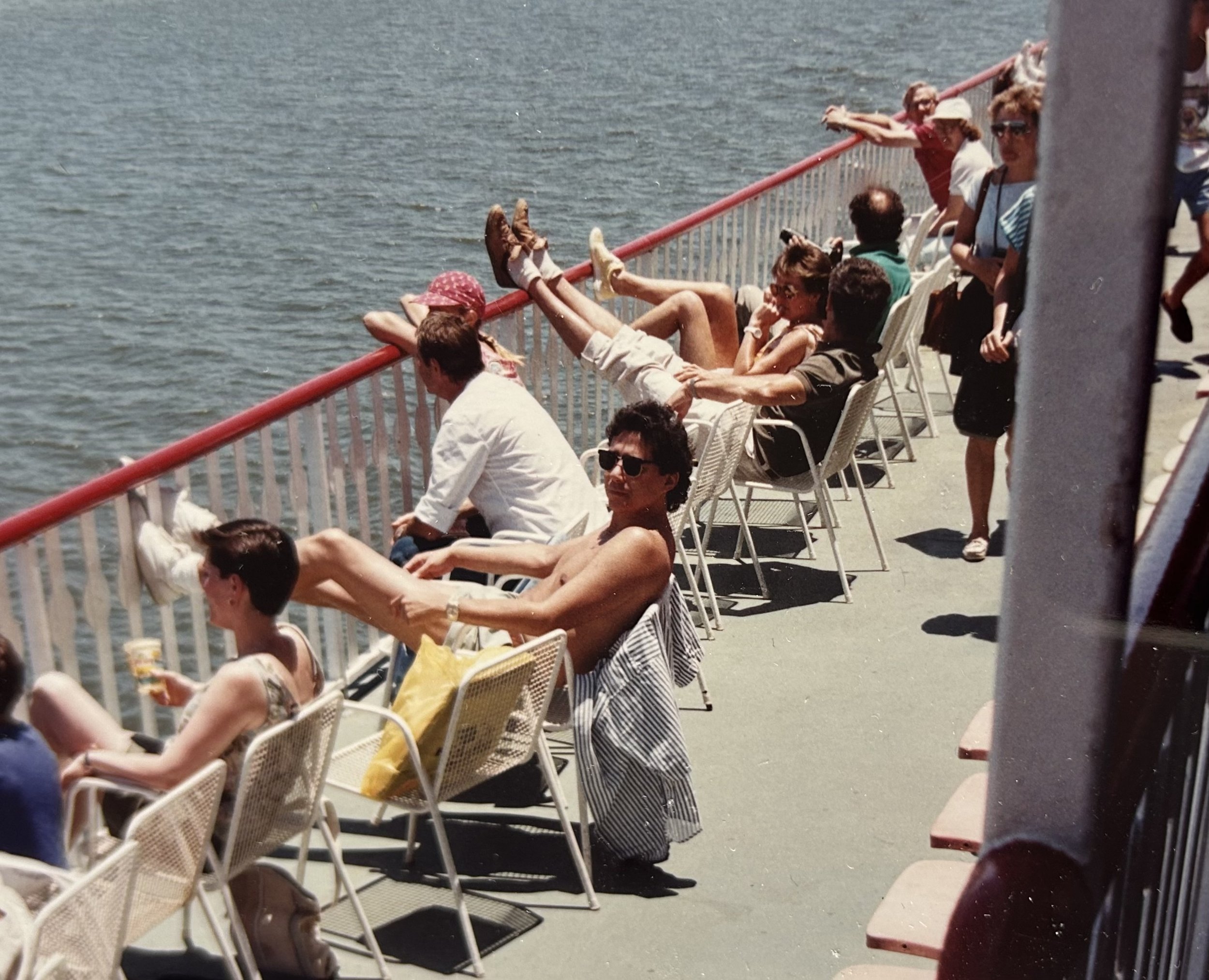
Photo by Daniella Canseco
