
Stop Sh*tting On the elephant from Sing
Eilidh Paterson
I saw both Sing 1 and 2 in cinema. I was there. Sat. Ready. Emotional in an apprehensive way. I have watched them again since and am therefore uniquely qualified to comment on the internet’s treatment of Meena the elephant.
She is a disciple of the ice age baby.
The hatred can be traced back to a scene which occurs within the first five minutes of the film. It is Meena’s grandfather’s birthday, and while the family sing, Meena does so a little too loudly and a little too operatically. There’s a hint of vibrato and a few runs. It’s bold. It’s extravagant.
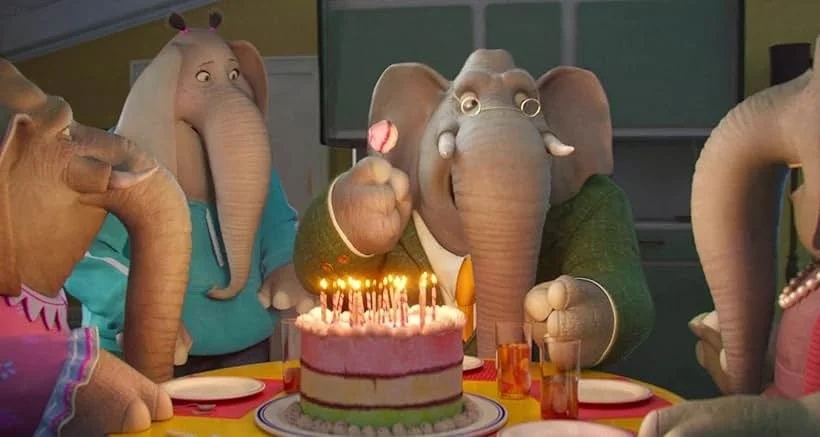
The internet hates her for it because it’s attention grabbing. Meena was deemed a “pick-me” for singing with sheer gumption and then acting surprised and shy afterwards, as though the vibrato was accidental. Naturally, TikTok users began putting photos of her into a blender.
Yet, I urge the court to watch the scene again.
Meena’s eyes are closed while she sings. She is so embarrassed afterwards that she covers her eyes with her ears. She blushes. She was simply intoxicated by the celebration. Anxiety is the defining feature of Meena’s personality and the film spells this out in big bright capital letters. You cannot fake a blush and, ergo, media literacy is totally dead.
The internet-coined phrase “pick-me” once described women who disingenuously sought attention and validation, typically from men, by belittling others. Fair enough. I therefore see the deploying of this phrase to a shy elephant with a dream as problematic; it is imprecise and the word is diluted. So not only is the accusation baseless; it was always incorrect.
The discussion snowballed into blatant cruelty. People stopped critiquing her behaviour and simply started fat-shaming her. “I bet she isn’t shy at the McDonald’s counter” guffawed one TikTok user. It is an astonishing thing to say about an elephant whose body shape has, for millions of years, been widely regarded as anatomically standard.
Indeed, it is critical to comprehend that Meena is not fat but by nature an elephant. We cannot long for skinny elephants. That is a road from which society does not return. Albeit Meena is large if you’re comparing her to Matthew McConaughey’s Buster Moon. For scale, he is a koala and she is an elephant. Much like in real life, the former would be dwarfed by the latter. Side by side, Meena is almost the same size as Johnny the gorilla (Taron Egerton) yet, nobody calls Johnny “biggie” and he sings just as much.
Even Tori Kelly, who voices Meena, called the controversy “kind of funny because […] it’s not me”. Kelly hilariously distances herself from Meena in the same tone that Robert Pattinson mocked and hated Edward Cullen and Penn Badgley labelled Joe Goldberg as a "reprehensible" stalker and murderer. These are reasonable positions. All Meena did was love her grandfather musically.
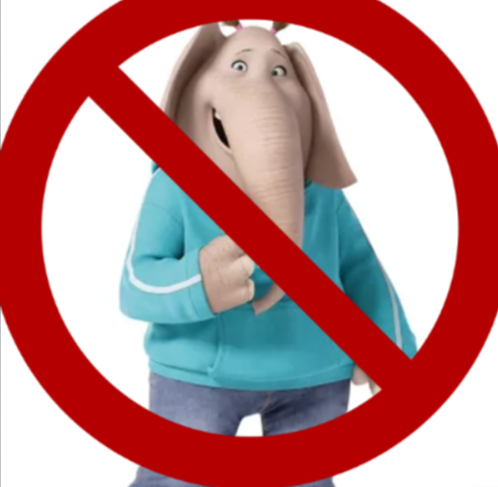
Contrary to the thesis I have advanced, I don't actually care whether people like a fictional elephant.
I care about how quickly thousands of people arrive at exactly the same opinion, using exactly the same language, making exactly the same jokes. Nobody reaches the conclusion independently. The internet reaches it once. Everyone else then repeats it to infinity. Nobody interrogates where that opinion came from. And comment sections are opened as buffers, used to solidify a decision before it is announced.
We are currently enduring a bandwagon-hopping epidemic. Somewhere between Vine dying and TikTok becoming a search engine, we stopped treating opinions as things we arrive at ourselves: they’re increasingly things we download.
I genuinely believe if tomorrow someone went viral for defending Meena we'd suddenly discover thousands of people claiming they always loved her.
You see it every year on Love Island. “Who do we hate this year?”, “Who are we voting for?”.
Who is this “we”?
Contestants become heroes or villains overnight. Then one viral defence appears and suddenly the consensus changes.
The fact is that belonging has become more important than thinking. Increasingly, people don't want an opinion as much as they want reassurance that theirs matches everyone else’s. It’s parroting. Mimicking an idea or thought in search of a silly reward.
Why has the archetypal girl with a dream become the villain? By the internet's own logic, where is the hatred for Rosita, the pig with twenty-five children? And if an elephant in a movie where the world is run by animals is fat shamed by human viewers, who is safe?
It’s much deeper than Meena. It’s much deeper than the ice age baby.
I’m telling you, the treatment of Meena the elephant is symptomatic of epistemological decline in Western society. A view charged by algorithms and FYPs carries weight far beyond the cancellation of an animated character.
Free Meena, free yourself, free your mind.
