
The Addams Family: A Review
Reviewed by Bel Kelly
The Addams Family is strong source material for adaptation. An eccentric family, unaware of their eccentricities and indifferent to judgement, meeting with ‘normal’ people, effortlessly generates humour. Whether they live in a suburb or in New York City, whether Wednesday is a sociopathic teenager or a happy-go-lucky little girl, it is up to each version to choose. The details are extraneous so long as the oblivious weirdo-regular guy dynamic remains.
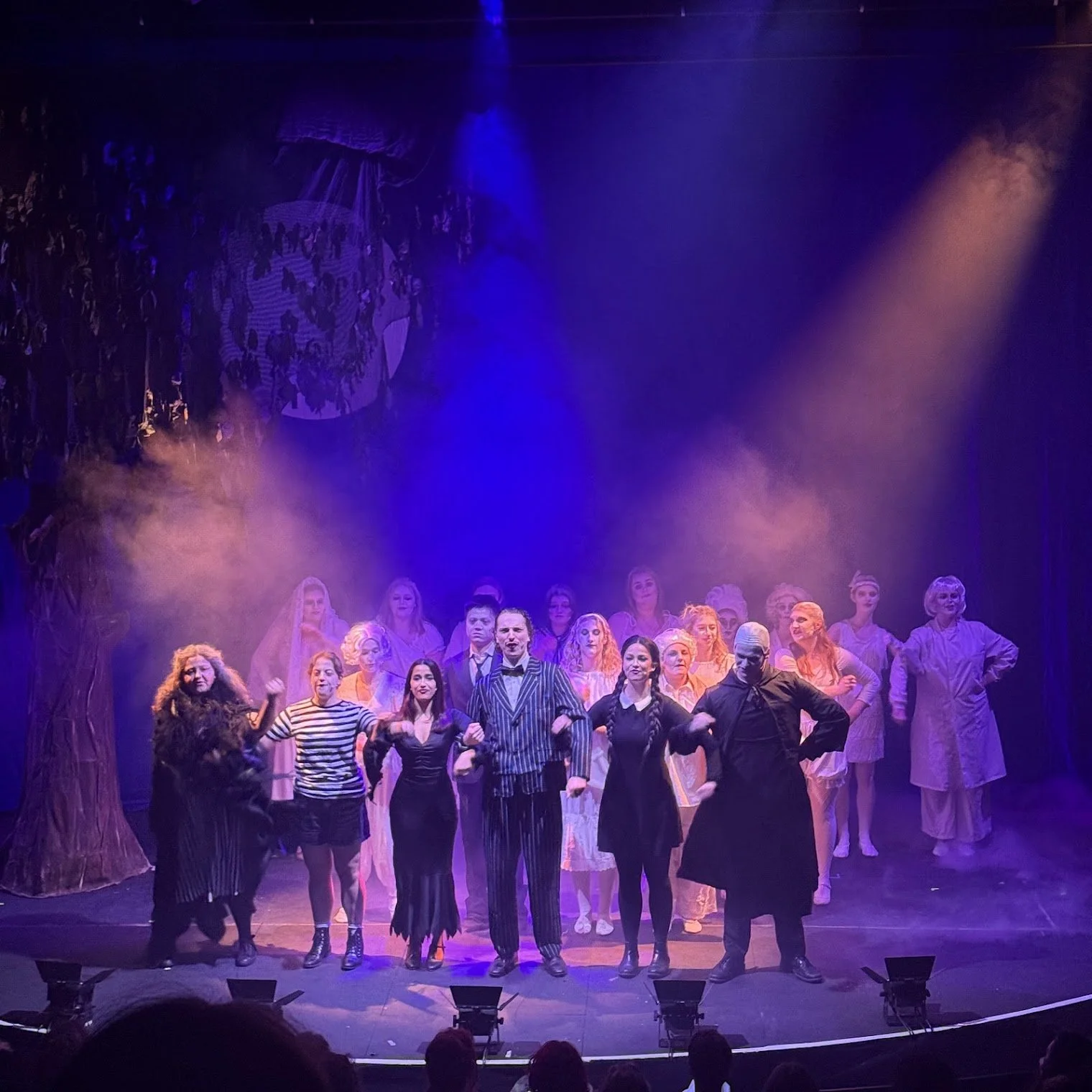
Photo by Karoline Foss and Rebecca Zammit Pace
Unfortunately, The Addams Family musical disregards that tension. The show follows Wednesday’s attempts to present her family as normal to her fiancé’s family, the Beneikes. In short: weirdos feel ashamed of their weirdness, try to be normal, then realise they should accept themselves as they are. It is predictable, tropey and misses the point of the Addamses.
They are supposed to be an alternative to the nuclear family, one that is based in radical inclusion and acceptance rather than heteronormative patriarchal conformity. They’re creepy, they’re kooky, they’re proud of it! To portray Morticia as a ball-and-chain wife frightened of growing old and Wednesday as a young woman desperate to get married borders on character assassination and leans into frustratingly sexist stereotypes.
But to put aside my grumblings, I am happy to admit that this production makes the most of its material, thanks in large part to its incredibly talented cast. Sam Morrison as Gomez was visibly nervous, which unexpectedly added to his charming performance. Ayla Jafri was fantastic as Morticia, bringing a commanding presence and impeccable comedic timing. Her interpretation was unlike any other Morticia I’ve seen, and the ability to make such a well-known role feel brand new is the mark of a great performer.
There was a noticeable lack of sexual tension between Gomez and Morticia — two characters who should be consistently teeming with frankly demonic levels of horniness for each other (to paraphrase The Addams Family 1991 script). Still, there was real affection there. Their tango in the second act was flawlessly done and delightfully romantic, and they made for well-matched leads.
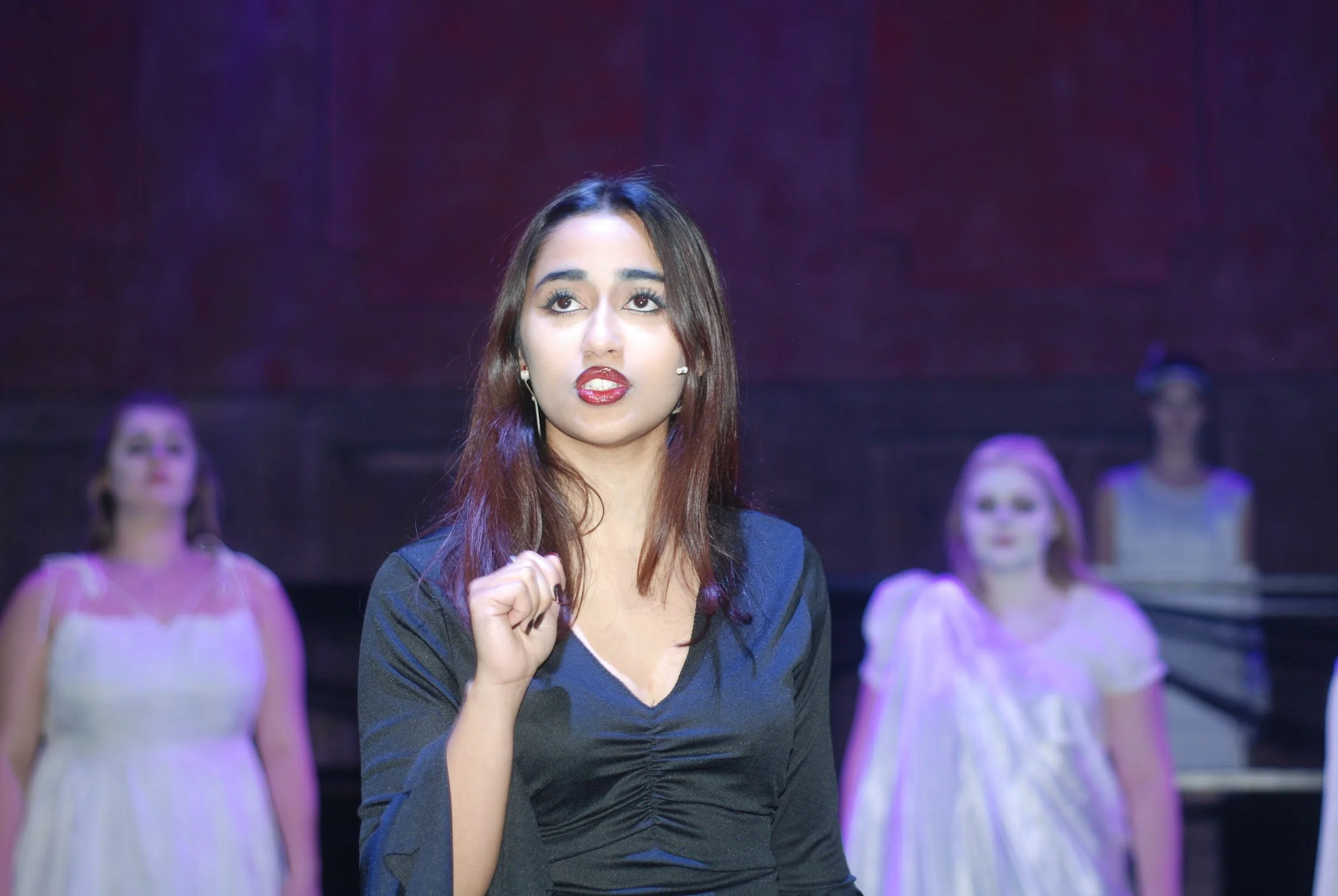
Photo by Karoline Foss and Rebecca Zammit Pace
Jade Morisseau as Pugsley and Abigail Carpenter as Grandma were both wonderfully cartoonish — just watching them react was enough to make me laugh. With their comically exaggerated accents and physicality, I believed for every minute they were on stage that I really was looking at a little boy and an elderly lady.
It was Keenan Parker as Alice Beneike who stood out to me as the show’s shining star. Her rendition of “Waiting”, performed as she maniacally climbed up and down the dinner table, was a true highlight. Her transformation from Stepford wife to madwoman throughout this song was astounding. Parker is living proof that there are no small parts, only small actors.
Eddie Williams as Uncle Fester made for a great emcee. Williams stood out most during his love song “The Moon and Me.” Similar to “Waiting”, what made this so special was its blocking. The chorus brandished blue umbrellas as Fester and his moon-lover performed something of a ballet, a moment that was both very sweet and very funny. If only every song had been as inventfully performed: many were sung with the actors simply standing, outward-facing, arms slack by their sides.
The costumes (Maya Kruger and Aisla Jennings-Gerlings) for the ghostly ancestors were both beautiful and great visual gags. We had a corpse bride and a spooky Hamilton. I wish the main cast had been given the same attention. Comparatively, they looked like they were dressed in first-result Amazon Halloween costumes rather than fully realized designs. However, the props, organised by Anneli Powell, were inventive and hysterical. The soft-toy goose representing a victim of Wednesday’s crossbow-hunting was a highlight.
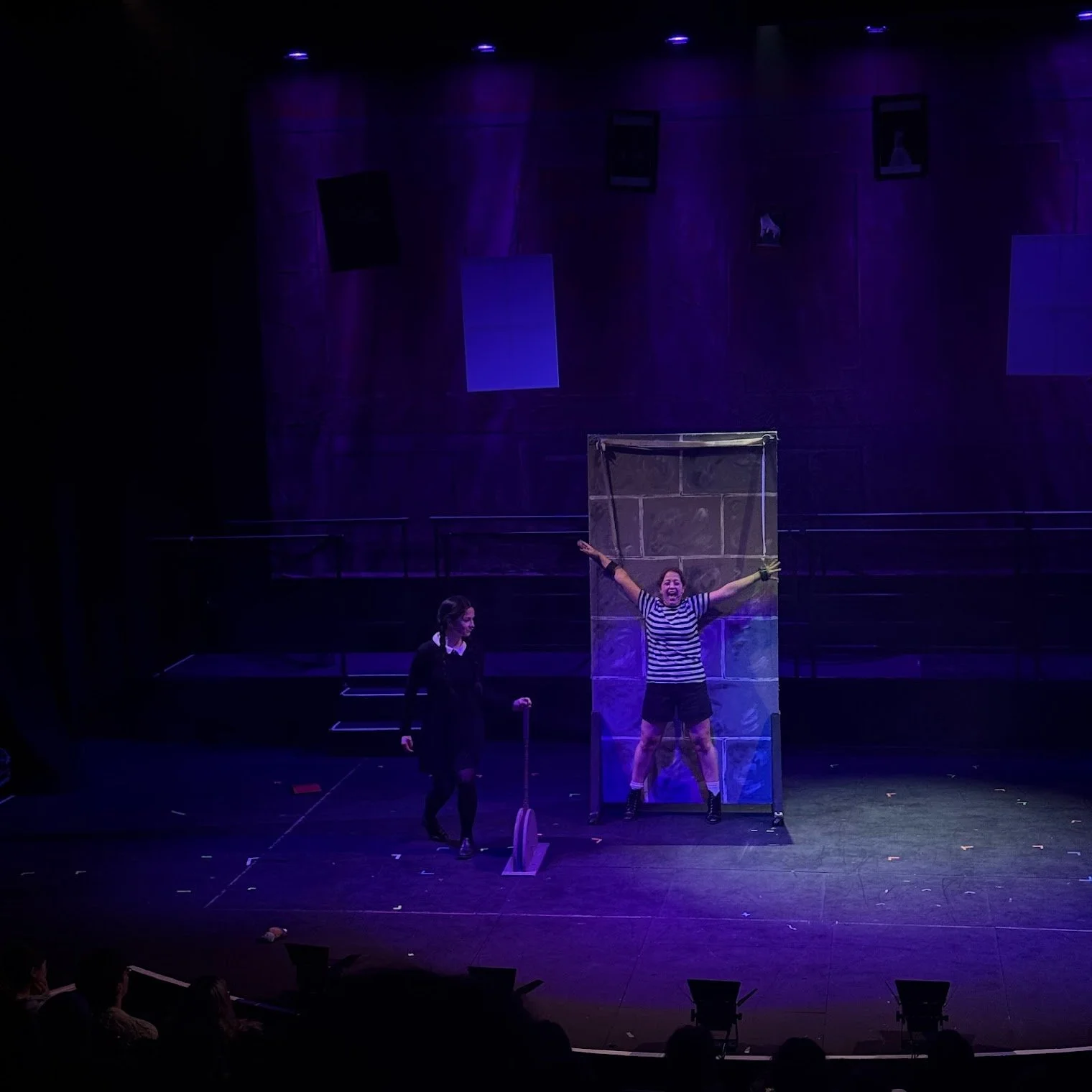
Photo by Karoline Foss and Rebecca Zammit Pace
Regardless of some pitfalls, the show offered a fun and genuinely enjoyable night out for its audience. I am certain that each member left with their cheeks hurting from smiling. Even as the cast took their bows, the audience was still roaring with laughter as a ridiculous Fester dummy dropped from the ceiling, pride flags were waved (though these did not make up for the lousy joke about the ‘man in the dress’), and the curtain raised to reveal the orchestra. It was an absolutely triumphant ending. The production had heart, which is, arguably, not only the most difficult part of putting together a show, but the most important.
A massive well done to everyone involved.
