
Amadeus: A Review
Reviewed by Miriam Rozas
The semester draws to a close as the sun finally warms our disgruntled walks to the library, but St Andrews theatre isn’t done yet! Week 12 starts and ends in Laidlaw Music Centre with STAAT’s ambitious production of Peter Shaffer’s Amadeus, directed by Aidan Monks.
The impressive orchestra settled us into our seats in the beautifully reformed McPherson Recital Room. Down the orchestra aisle sat Antonio Salieri, shrouded in a white blanket, his gaze lowered onto his wringing hands. Once the music ended, Dylan Swain’s Salieri began his ceaseless stint onstage, guiding us through his dramatised two-act battle with Mozart (or, more ambitiously, with God).
Swain began as an aged Salieri looking back on his life, his divinely granted musical career, and his kryptonite — the genius Wolfgang Amadeus Mozart. He rambled, stumbling after mysterious chorus whispers from above. He was hunched from age yet stuck in juvenile gluttony, a spoiled child shoving cakes into his mouth. The madness in his eyes, of both insanity and rage, never left. Swain gifted us with a ravishingly self-centred narrator for his desperate struggle against unattainable musical mastery.
Salieri had two gossiping companions, the Venticelli, played by Iha Jha and Rebecca Ravara. Dressed in black and occasionally masked, they sprung about the stage, morphing into beaming wives, servants and statues.
Callum Wardman-Browne played Mozart with wit, apt oblivious insensitivity and a staple shrill cackle. He moved with the drive and confusion of a genius who had grown accustomed to celebration but now encountered repeated obstacles set by the cunning Salieri. Most striking was Wardman-Browne’s move from an insufferable skipping success to a desperate, lifeless child, hiding beneath a blanket and “reduced to a nursery rhyme”.
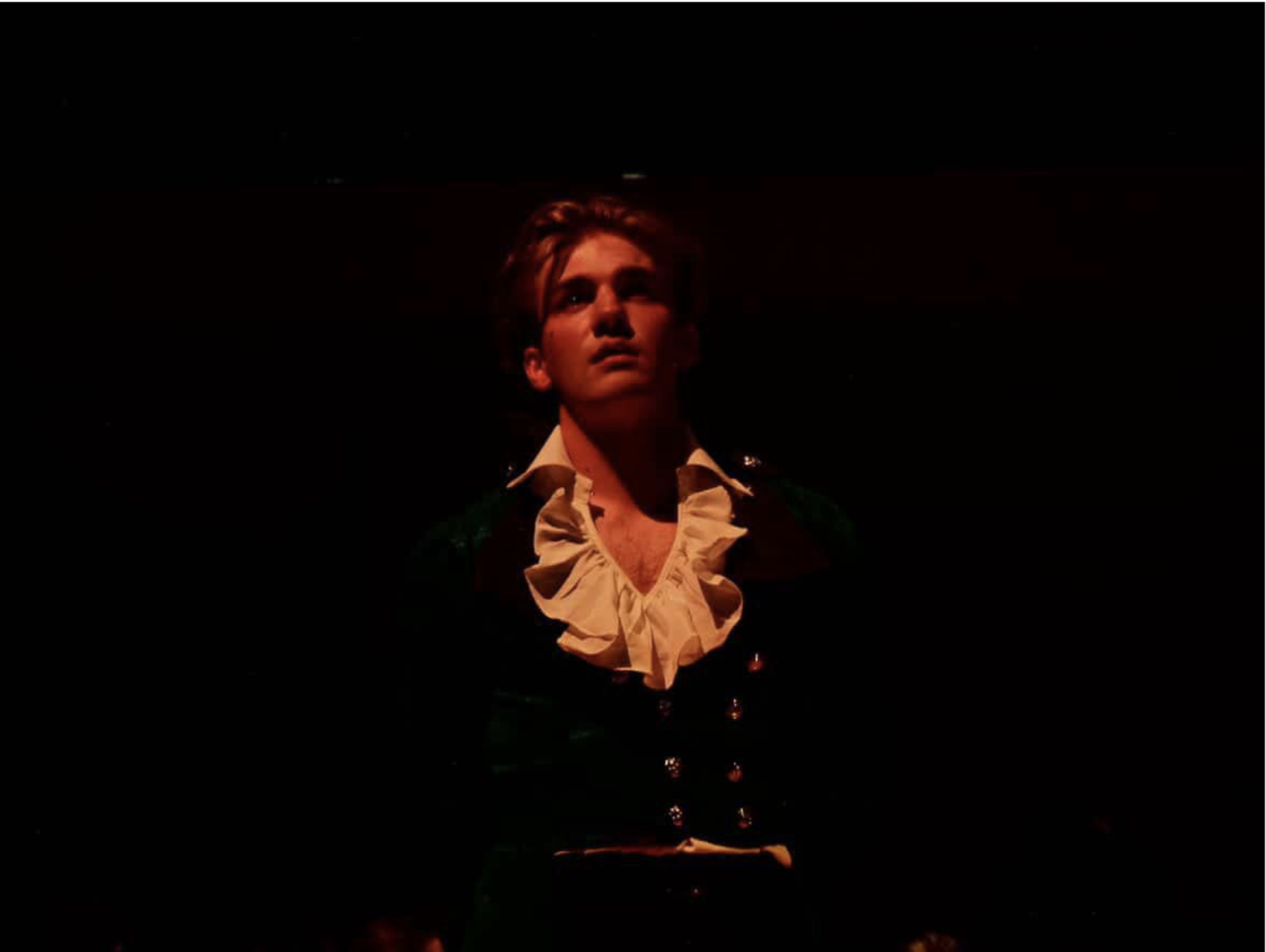
Photo credit: Kritvi Gupta
Wardman-Browne was part of two wonderful pairings, one with Swain’s Salieri, with whom he had excellent chemistry that twisted through misplaced trust and exasperation, and with his partner, Hanna Ward’s Constanze. The youthful pair were inseparable through spats, shrieks, games and nicknames. Was it pleasant watching them play cat-and-mouse and slap each other silly in baby voices? No, of course not. But they were undeniably funny, so mission accomplished!
Ward deserves standalone credit; she skipped through the fading joy of youth, blind love, exhaustion and grief. Her Constanze embodied a feminine strength needed in a show otherwise overwhelmed by (flamboyant and well-wigged) masculinity.
Almost everyone spoke with exceedingly posh accents, but despite the sea of pantomime pronunciation, distinguishing the grandeur of McCance’s Emperor Joseph II from the rest of the group was no challenge. To match his extravagant eyeshadow, frilled white layers and a rather judicial wig, McCance accessorised the character with excessive sighs and the exclamations of an insatiable child. Indeed, McCance brought “fetes and fireworks” to the stage consistently, a scene-stealer through every choice - extending the leg or demanding another layer of face powder that wafted from the balcony.
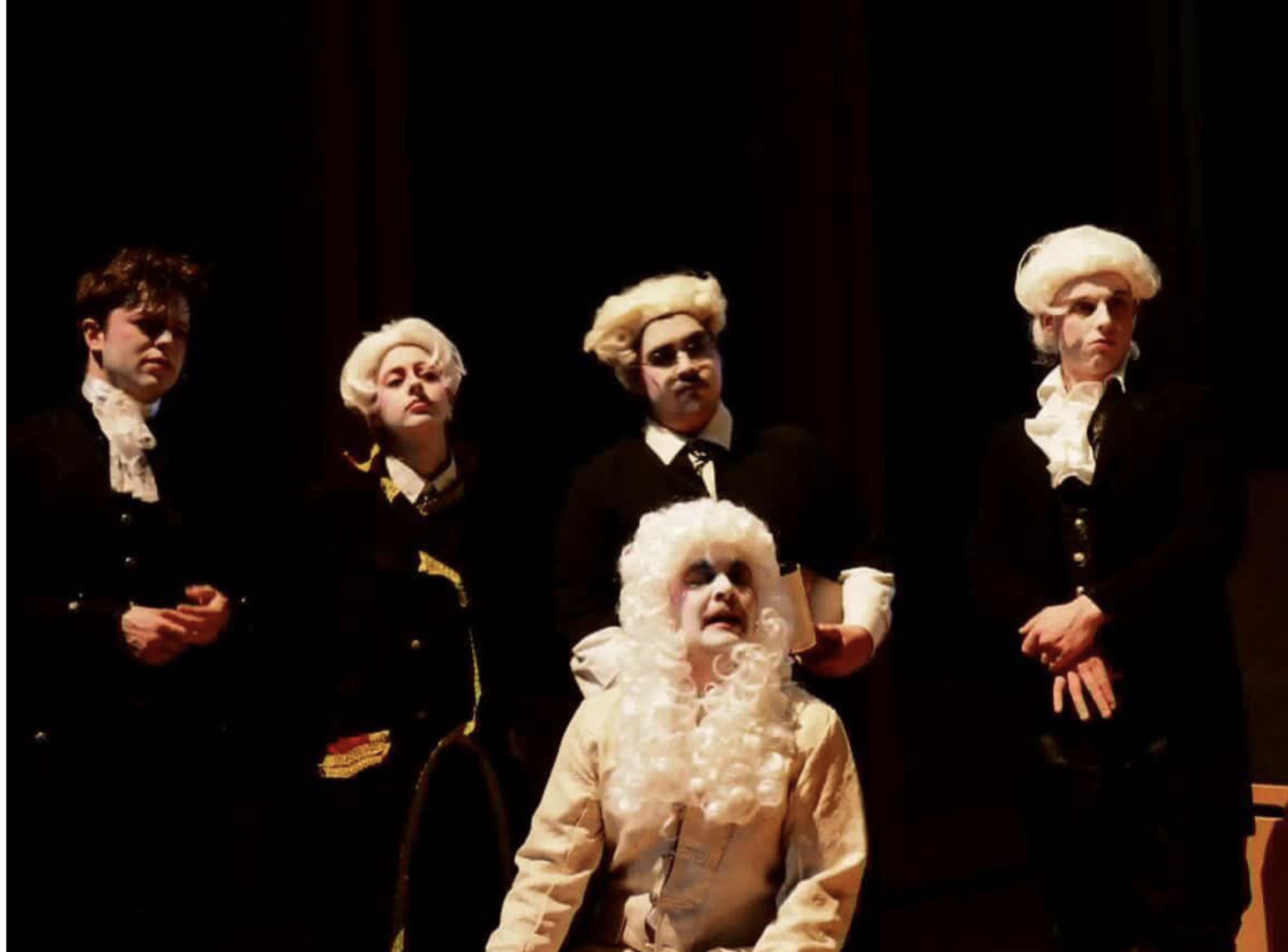
Photo credit: Kritvi Gupta
With the Emperor marched a wonderful court trio, played by Matthew Clegg, Lara Kassat and Andrew Ibarra. An honourable mention to Ibarra, who struck down the last of the show’s comedy with the Baron’s stern denouncement of Mozart. The court figures were the finest example of the hair and makeup design by Kritvi Gupta and Lila Patterson, who strikingly combined the 1980s’ bright blushing makeup with the stiff polyester of 1700s costumes.
The production’s innovative use of its venue was a credit to Monks’ directorial vision. The McPherson Recital Room, despite holding much potential, has long been underused. Flipping the room around gave the production the levels it needed, from the raised stage to the use of the balcony, and freedom to move among the orchestra.
Due to this extensive movement, the cast weren’t always lit, particularly those wearing shadow-casting wigs. However, this was outweighed by moments of lighting brilliance, including a divine light for Salieri to beg to and effective spotlights and colourwashes, all surprising revelations of Laidlaw’s equipment. Technical Director Willa Meloth not only overcame the venue’s limitations but rendered them unnoticeable.
What would Amadeus be without its classical undercurrent? The student orchestra not only accompanied but starred in this production. Ben Williams led twenty-four musicians in professional renditions of Mozart’s genius, with stunning vocal performances by Eleanor White and Hanna Ward. At times the music overwhelmed Salieri’s vicious plots, but the music was crucial and never unwelcome. I particularly loved the orchestra’s role beyond playing, an enchanting addition that I won’t spoil.
Fittingly, Mozart’s Requiem played as Salieri clasped at immortality, marking the final movement of Amadeus as a marriage of timeless classical tradition with the flourishing newness of St Andrews talent. I was left to reflect on fame and talent in its many forms; love, loathing, immortality, infamy. Mozart may not have needed STAAT to prove his excellence, but his battles with himself and with Salieri were brought to life beautifully in a showcase of the very best of St Andrews.
Last chance to catch the final two performances of STAAT’s Amadeus will be at the Laidlaw Music Centre on Sunday 26th April, at 2pm and 7pm.
