
The Art of Gatekeeping:
Don’t Read This, It’s Just for Me
Chiara Marini
Gatekeeping has a bit of a reputation problem. It’s usually written off as petty or pretentious – something you get called out for if you hesitate to share a song, a shop, a movie or a place you feel oddly protective over. But that feels too simple. Sometimes it’s not about being difficult. It’s about something meaning something to you.
The idea of gatekeeping didn’t start with playlists and outfits. It originally referred to controlling access to information – deciding what reaches public knowledge and what is kept out. Over time, the ‘gate’ has changed into something much smaller and more personal. Now, when we talk about gatekeeping, we’re often talking about taste and identity: the quiet, unspoken ways we attach meaning to the things we love. And that attachment can be surprisingly intense.
It’s easy to assume that people gatekeep because they want to feel superior, which is probably true at times. There’s an underlying social currency in being the first to know something, or in having taste that feels distinct or hard to access. But that isn’t the whole story, or even the most interesting part of it.
When you find something so small yet weighted in meaning – a song, a perfume, a particular item of clothing – for a moment, it feels like it belongs entirely to you. Not literally, but in the way memories and meanings latch onto things. Sharing it risks losing that feeling, turning something personal into something ordinary.
I used to be terrible for it, especially with music. I would naturally hesitate when someone asked, “what song is this?” Because the truth is, some songs don’t feel common; they feel claimed. You end up attaching them to a particular time or feeling, and if you give them away too quickly, that connection no longer feels the same. There’s also the slightly irrational notion that no one else is going to get it in the same way you do. Suddenly it’s not your song anymore, but just a song. It’s a fragile sentiment. And that fragility is where a lot of gatekeeping stems from.
As I’ve grown older, I’ve noticed that I don’t gatekeep in the same way. It matters less to me if someone else knows the song, or wears the same thing, or finds the same place. A large part of that is probably just growing up and no longer feeling the need to define yourself through what you know or what you have first. But I still, without actively feeling it, understand the instinct. I recognise that initial hesitation, that quiet moment of wanting to keep something just for yourself.
There’s undoubtedly an art to gatekeeping and some degree of beauty in it. Not the kind that shuts people out or makes them feel unwelcome – that’s something else entirely – but the quieter version. The response that comes from loving something so much that you want to hold onto it, even if only for a second longer. And that habitual reaction translates to something quite sweet. It says that the things we amass aren’t just interchangeable content. They matter to us, and so do the little worlds we built around them. We give them meaning.
So, maybe the next time someone gives you a vague answer – “Oh, it’s just something I found” – it isn’t evasiveness. It’s a small act of preservation, a way of keeping something special before it becomes ordinary.
And if they do end up telling you anyway, smiling like they didn’t hesitate at all – there’s a good chance they did.
Just for a second.
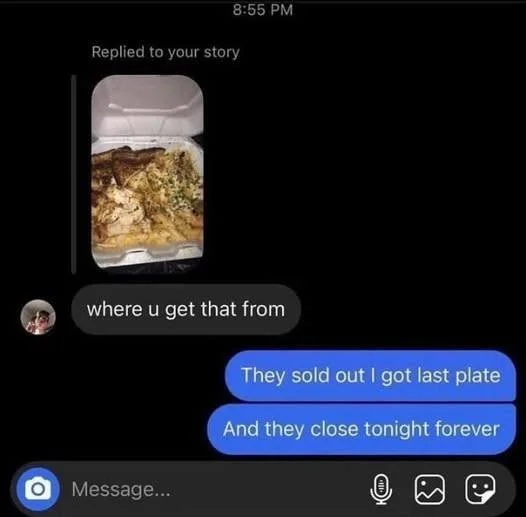
Image from Instagram
